Pizza Crust: Surprisingly hard, until it’s not.

I’ve been making pizza in one form or fashion for years. My first job was actually making pies at Round Table Pizza, so I felt like I knew what I was doing when my kid asked me for pizza a couple weeks ago. No problem, I thought, I’ll even go back to my roots and pick a pizza screen instead of using my beat up old baking sheet from IKEA.

And then the problems started. The first crust was fused to my pizza screen. More research. My second crust kept snapping back and wouldn’t stick to the parchment paper. More research. My third crust was unevenly distributed so it was undercooked in the middle. More research. And, finally, FINALLY, I nailed the bake. Jesus.
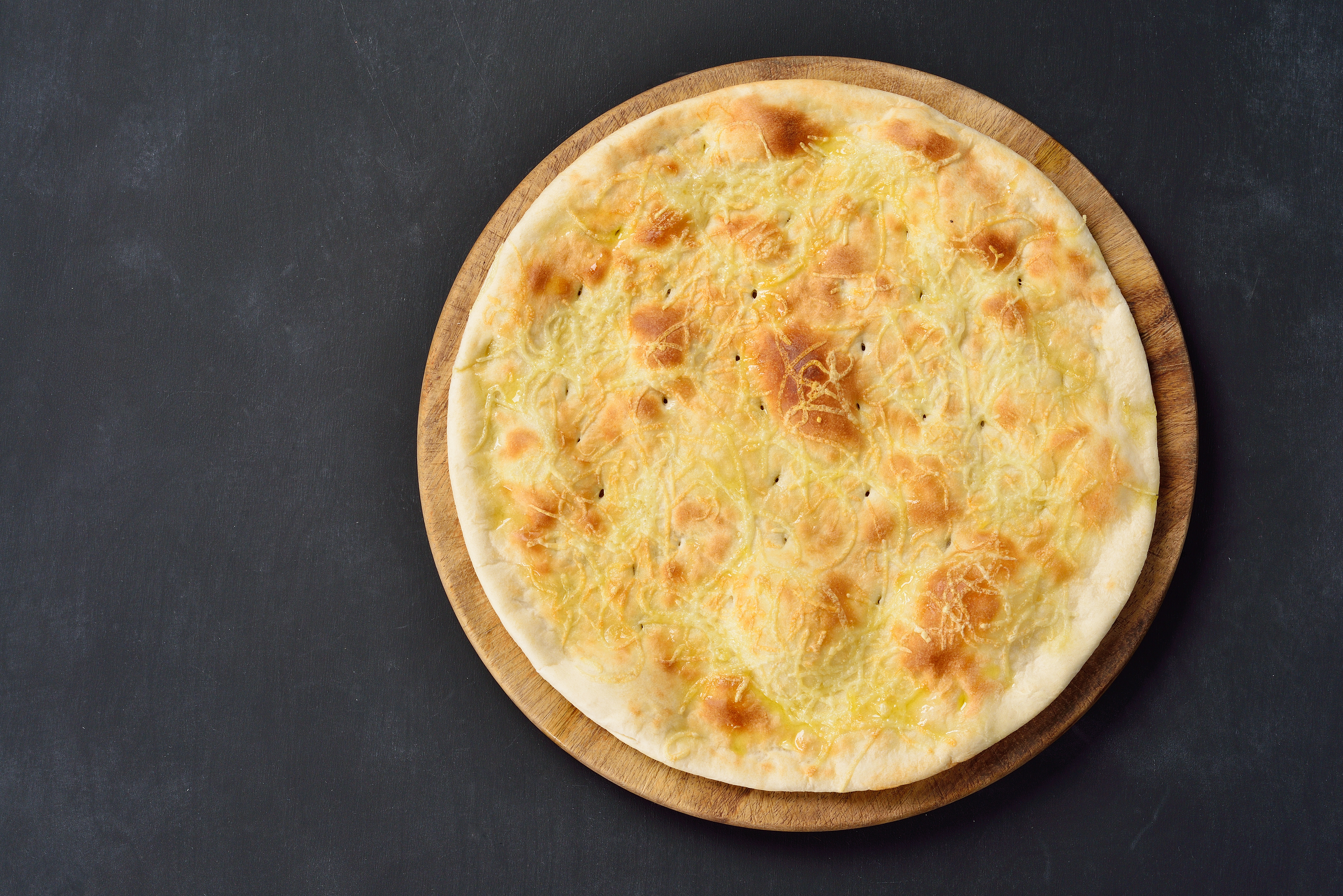
Pizza Crust

Special Equipment

  • Parchment Paper
  • Pizza Screen
  • Rolling Pin
    • *Note: I tried twice to stretch this dough with my hands. You know when I started to make progress with my bakes? When I started using my rolling pin. Don’t be a hero.

Ingredients

  • Extra Virgin Olive Oil (EVOO)
  • All Purpose Flour
  • Store-bought dough
    • *Note: This post is about baking technique, but if you want to make your pizza dough from scratch, here’s the recipe I use.

Preparation

  • Drizzle 1 tbsp EVOO into a bowl.
  • Remove your dough from the package and plop (yes, that’s a technical term) into the oiled bowl. Roll it around to get your dough-baby nice and lubed up (also a technical term, just probably not this industry.)
  • Cover the bowl in plastic and let the dough rest at room temperature for no less than 30 minutes. Ideally an hour. Pour a glass of lovely, watch your stories. Relax. Everyone will eat … eventually.
  • Preheat your oven to 500 degrees.
    • *Note: If you have a convection oven, use the 450 degree setting with the convection fan on.
    • *Another Note: You can pre-heat earlier if you want, I just live in a warm climate so heating up my house is not rad.
  • Once the dough has rested, pour another glass – it’s ok, we know you finished the first one, gah-head – and sprinkle all purpose flour all over the counter.
  • Plop your dough onto the counter.
  • Sprinkle your spouse-wrangler, :::cough:::, rolling pin with flour as well.
  • Roll your dough out into approximately a 12-inch circle.
    • *Note: This isn’t your drafting class. Don’t focus on shape, focus on an even thickness of the rolled-out dough. About 3/4 of an inch will do.
  • Poke your dough with a fork in a few spots to prevent it from puffing up.
    • *Alert!: Do NOT do this step with your dough on the screen.
  • Spray your pizza screen with non-stick and cover with a piece of parchment paper.
  • Slide your rolled out dough on the screen.
  • Bake for 6 minutes.
  • Once the par-bake is complete you are ready to move on to the next step, pizza brilliance.
  • Slide the parchment paper out from under the crust, brush it with EVOO, cheese, sauce, top with ingredients, and slide that bad boy back in the oven for 12 minutes.

If you can nail the crust, I promise you that the rest is easy. You have a blank canvas awaiting your benevolence, or your revenge, depending on whether the chores were done without you nagging.

Nom On, Vino Goddess. You’ve got this.

~Crunchy
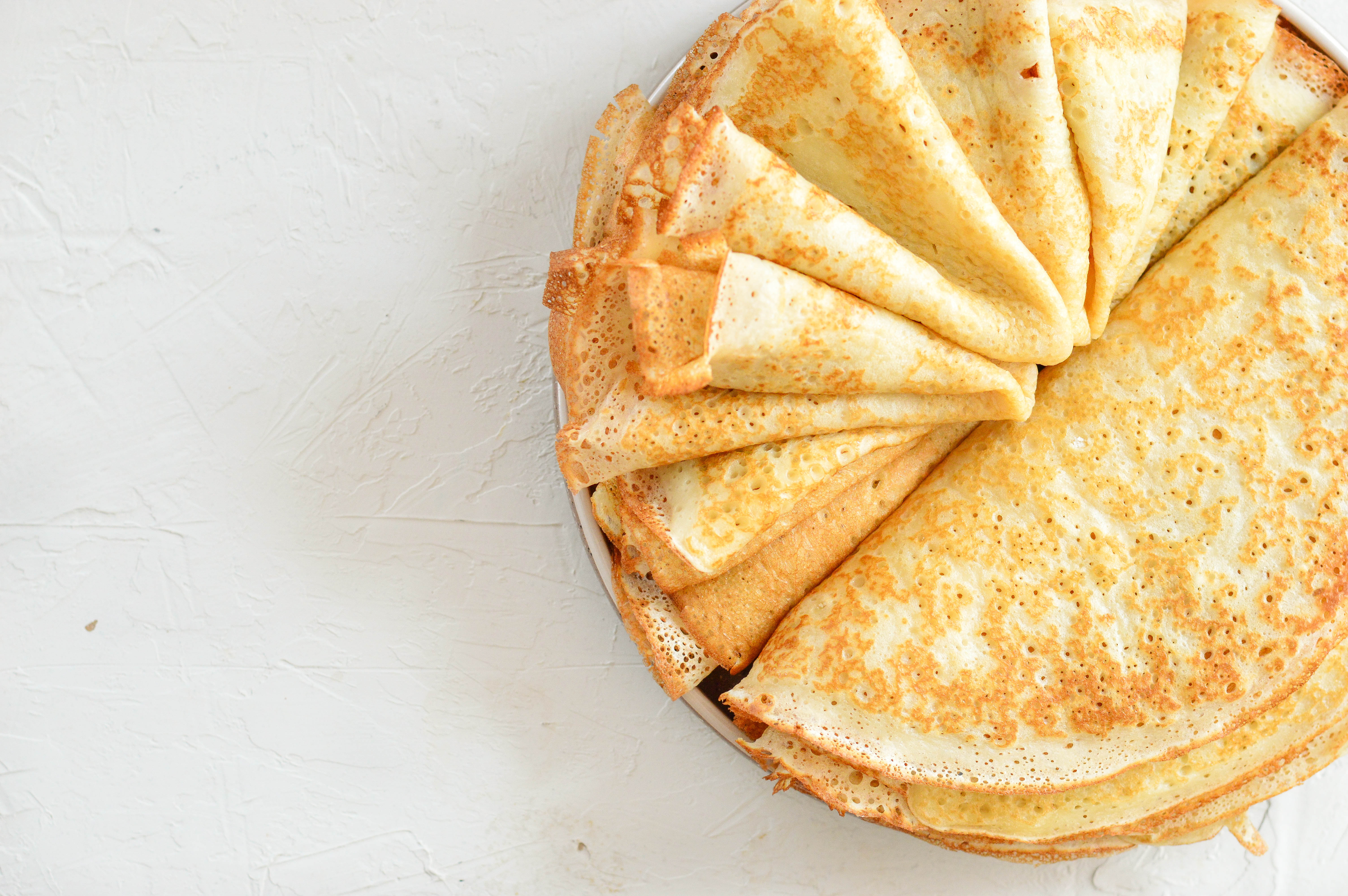
The Versatile Crepe: France’s anathema for anxiety

I’ve been making crepes for many years and for some reason I have hesitated to write this blog post. I think my ‘piece de resistance’ was the year I made crepes stuffed with Rosemary Turkey Breast, smothered with Sherry Shallot Gravy and drizzled with Cranberry Coulis. The crepe, while a delightful pain in the ass to make, is at once both humble and elegant.

But, Crunchy, why would you call it an anathema for anxiety? That seems a little …. I don’t know … bombastic? A Hyperbole? Grandiose? Well, my love of my thesaurus aside, I’m not wrong. No matter how cranky and anxious I’m feeling, 45 minutes of highly focused, yet surprisingly ‘chillaxy’ ladling and swirling later, I hate the human race at least 40% less. The end result is a tangible batch of perfect crepes ready to be stuffed, folded, drizzled, and smothered in any number of other delicious and decadent ingredients.

The Versatile Crepe

Equipment:

Ingredients:

*Don’t be Cheap! Alert: The French live and die by the care, quality, and technique that goes into … well, just about everything they do. You will commonly find French recipes to have very few ingredients because every one of them count. For the Milk, please go organic. For the eggs, free-range organic. For the salt, it needs to be kosher. Finally, for the butter, choose a high-quality brand. Just do the best you can and remember that the money you spend on the ingredients will make a huge difference in the quality of your end result.

  • 420 ml or 1 3/4 cups Whole Milk. Reserve an additional 1/2 cup in case your batter becomes too thick. You may need to add a little more as needed.
  • 4 Large Eggs
  • 1/2 tsp Kosher Salt
  • 190 g or 1 1/2 cups All Purpose Flour
  • 1 Stick Unsalted Butter. Melt 6 Tbsps of butter for the crepe batter. Reserve the remaining 2 tbsps from the butter stick for greasing your pan.

Preparation:

As I have mentioned, I have made crepes many, many times. I distilled the essentials of the batter preparation in the order that you need to construct it, and it goes like this:

  • Milk, Eggs, Salt. Blend.
  • Flour. Blend.
  • Melted Butter. Blend.
  • Shove blender carafe into refrigerator for 60 minutes.

And now to let all your worries swirl away for 30 minutes:

  • Heat your crepe pan on low heat. You don’t want your crepes to burn so I suggest about a level 2.
  • Drop a sprinkle of water. If it sizzles you are ready to party.
  • Take your remaining 2 Tbsps of butter and grease a piece of paper towel.
  • Gently coat your crepe pan with the buttered paper towel. (Don’t be Lazy! Alert: If you just grease your pan with the stick of butter you will end up with too much and it will result in over caramelization.)
  • Quickly dip your soup ladle into the batter and pour a circle that covers 3/4s of the pan.
  • Immediately pick the pan up and rotate it in gentle circles, allowing the batter to spread and thin out to the outer edges of the pan. If you end up with any little holes you can dribble a little additional batter there.
  • The crepe will take less than a minute to cook. You are looking for the edges to just start to dry up. I like to gently test if I can slide my spatula underneath the crepe after about 30 seconds.
  • Flip the crepe over. Don’t be alarmed if you need to help it out a little with your hands. They are difficult to flip so don’t think of it like a pancake. I usually have to help the little dude out by readjusting it. Cook the second side for about 15 seconds.
  • Slide it onto a waiting plate.
  • Repeat the cycle for another blissful 30 minutes.

*Don’t be Distracted! Alert: Unless someone is bleeding or on fire and there isn’t another individual in the house who isn’t bleeding or on fire also that can deal with that situation, this is all you are going to be doing. Period. It’s just you, a heated crepe pan, carefully pouring, swirling, delicately flipping, sliding onto a plate. Repeat. Repeat. Repeat.

“Wait, why was I having a bad day again?” You’re welcome.

Ummm, What Should my Crepes Look like?
If you want to make a traditional crepe, it should be very thin and pale as the driven snow. Ok, maybe not the snow, but you get the idea. The reality is, butter browns. If your crepes have some color on them, fear not. They will still be delicious, I promise. But as you work your way through your batch, that is what you are looking for.

Nom On,

~Crunchy